Payment failures are often viewed as a technical issue.
A temporary glitch. A connectivity problem. Something for the engineering team to resolve behind the scenes.
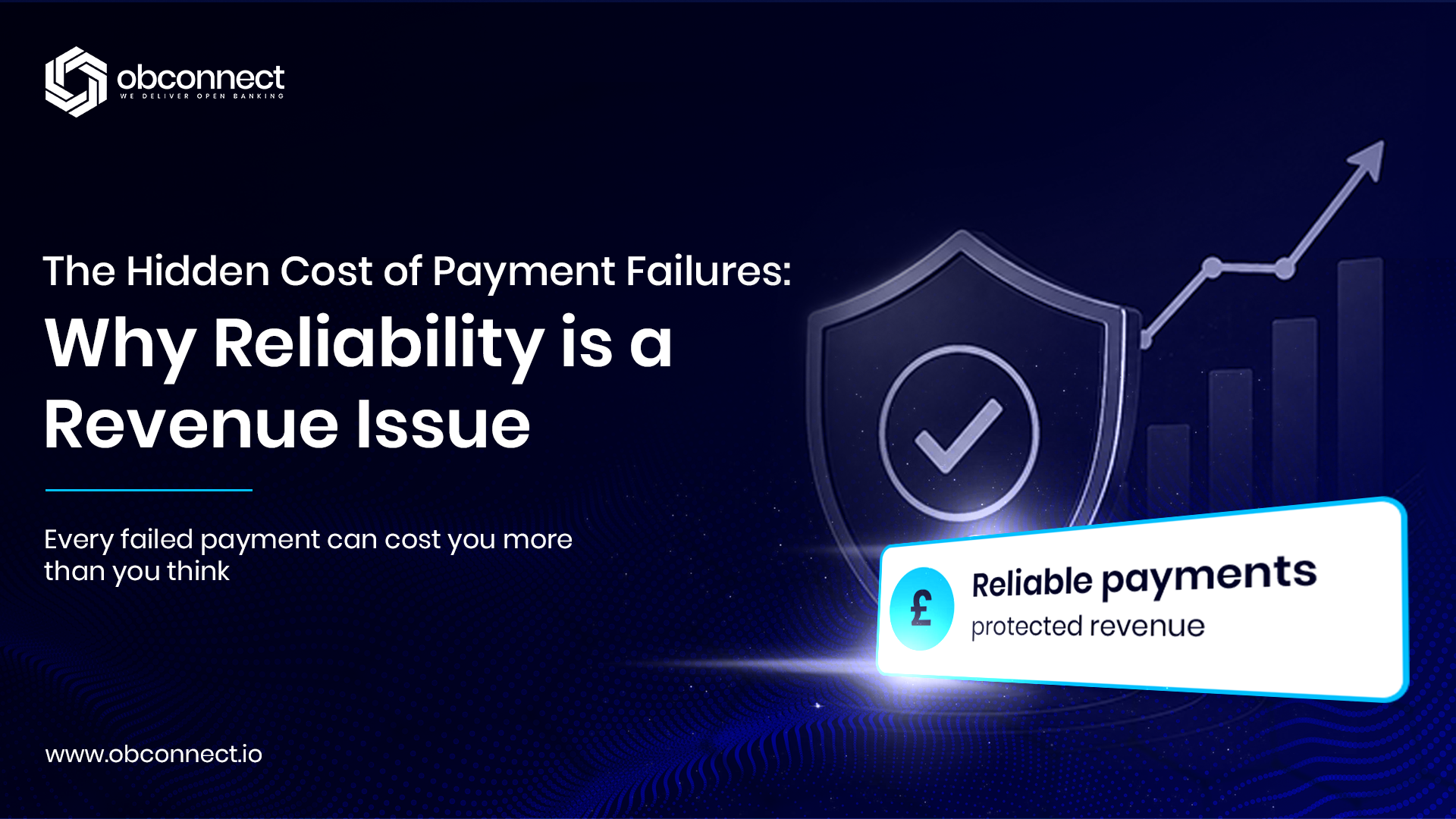
But for businesses – particularly those operating at scale – payment failures are something far more significant. They are a revenue issue.
Because every failed transaction represents more than a momentary disruption. It is a missed opportunity, a potential loss of customer trust, and in many cases, revenue that may never be recovered.
As payments continue to evolve, the ability to process transactions reliably is no longer just an operational requirement. It is a commercial necessity.
The Direct Cost of Failed Payments
The most obvious impact of a payment failure is immediate.
A transaction does not complete. A purchase is not made. Revenue is lost.
In some cases, customers will attempt the payment again. But many will not.
In high-friction environments – particularly in e-commerce – even a minor disruption can be enough to cause abandonment. The customer leaves the checkout, and the sale is gone.
For subscription-based businesses, the impact can be even more pronounced.
Failed payments can lead to missed billing cycles, service interruptions, and increased operational effort to recover funds. Over time, this creates inefficiencies that compound.
At scale, these “small” failures add up quickly. What appears to be a marginal issue at the transaction level becomes a significant revenue leakage across thousands – or millions – of payments.
The Indirect Cost: Trust, Perception, and Retention
While the direct financial impact is measurable, the indirect cost of payment failures is often more damaging. Every failed transaction introduces doubt. From the customer’s perspective, it raises questions:
- Did the payment go through?
- Has the money been taken?
- Can I trust this service to work properly?
Even if the issue is resolved quickly, the experience leaves a mark. Trust, once disrupted, is difficult to fully restore.
As highlighted in broader discussions around payment experiences, consistency and reliability are critical to building long-term confidence in any payment method .
Customers do not differentiate between the merchant and the payment infrastructure behind it. They associate the experience with the brand. This means that a failure in the payment layer becomes a failure in the customer experience. And over time, that impacts retention.
The High-Volume Merchant Reality
For high-volume merchants, payment reliability is not just important – it is mission-critical.
When thousands of transactions are being processed every hour, even a small failure rate can translate into substantial losses.
Consider the impact of:
- A brief period of downtime during peak trading hours
- Increased latency causing checkout delays
- Inconsistent performance across payment methods
Each of these scenarios affects conversion rates. Each introduces friction into what should be a seamless process. And each ultimately reduces revenue.
This is why large merchants place such a strong emphasis on payment performance. It is not about perfection. It is about predictability.
Why Reliability Equals Revenue Protection
There is a tendency to view payment infrastructure as a cost centre – something that supports the business but does not directly drive growth.
In reality, the opposite is true. Reliable payment infrastructure protects revenue.
It ensures that customers can complete transactions without friction. It supports consistent conversion rates. It reduces the risk of abandonment and builds long-term trust.
In this sense, reliability is not just about avoiding failure. It is about enabling success.
As Open Banking and account-to-account payments continue to scale, this becomes even more important.
Because unlike legacy systems that have been refined over decades, newer payment models must prove that they can deliver the same – or better – levels of reliability. Without that, adoption will always be limited.
The Role of Performance and Resilience in Open Banking
Open Banking offers clear advantages – lower costs, faster payments, greater control.
But these benefits only matter if the underlying infrastructure performs consistently.
As explored in earlier discussions, challenges such as latency, variability across bank APIs, and the absence of standardised guarantees can impact merchant confidence . This is where performance and resilience become critical.
Businesses need assurance that:
- Payments will process reliably under all conditions
- Systems can handle high transaction volumes without degradation
- Issues can be identified and resolved in real time
Without this foundation, even the most innovative payment method struggles to gain traction.
How obconnect Delivers Reliable Payment Performance
At obconnect, we recognise that reliability is not a feature. It is the foundation of every successful payment experience. Our approach is designed to ensure that businesses can operate with confidence, regardless of transaction volume or complexity.
This includes:
- Always-on infrastructure built for high-volume environments
- Performance optimisation to minimise latency and improve response times
- Resilient architecture that anticipates and mitigates potential failure points
- Real-time monitoring, providing visibility across every stage of the payment journey
These capabilities are not just technical enhancements. They are revenue protection mechanisms. Because when payments work consistently, businesses perform consistently.
Every Transaction Matters
In isolation, a single payment failure may seem insignificant. But at scale, it tells a different story. It represents lost revenue, diminished trust, and missed opportunities.
As the payments landscape continues to evolve, businesses cannot afford to treat reliability as an afterthought. It must be prioritised. Because ultimately, every successful transaction contributes to growth. And every failed one holds it back.
Ready to Strengthen Your Payment Reliability?
At obconnect, we help businesses build payment experiences that are fast, resilient, and dependable at scale.
If you are looking to reduce payment failures and protect your revenue, get in touch with our team today.